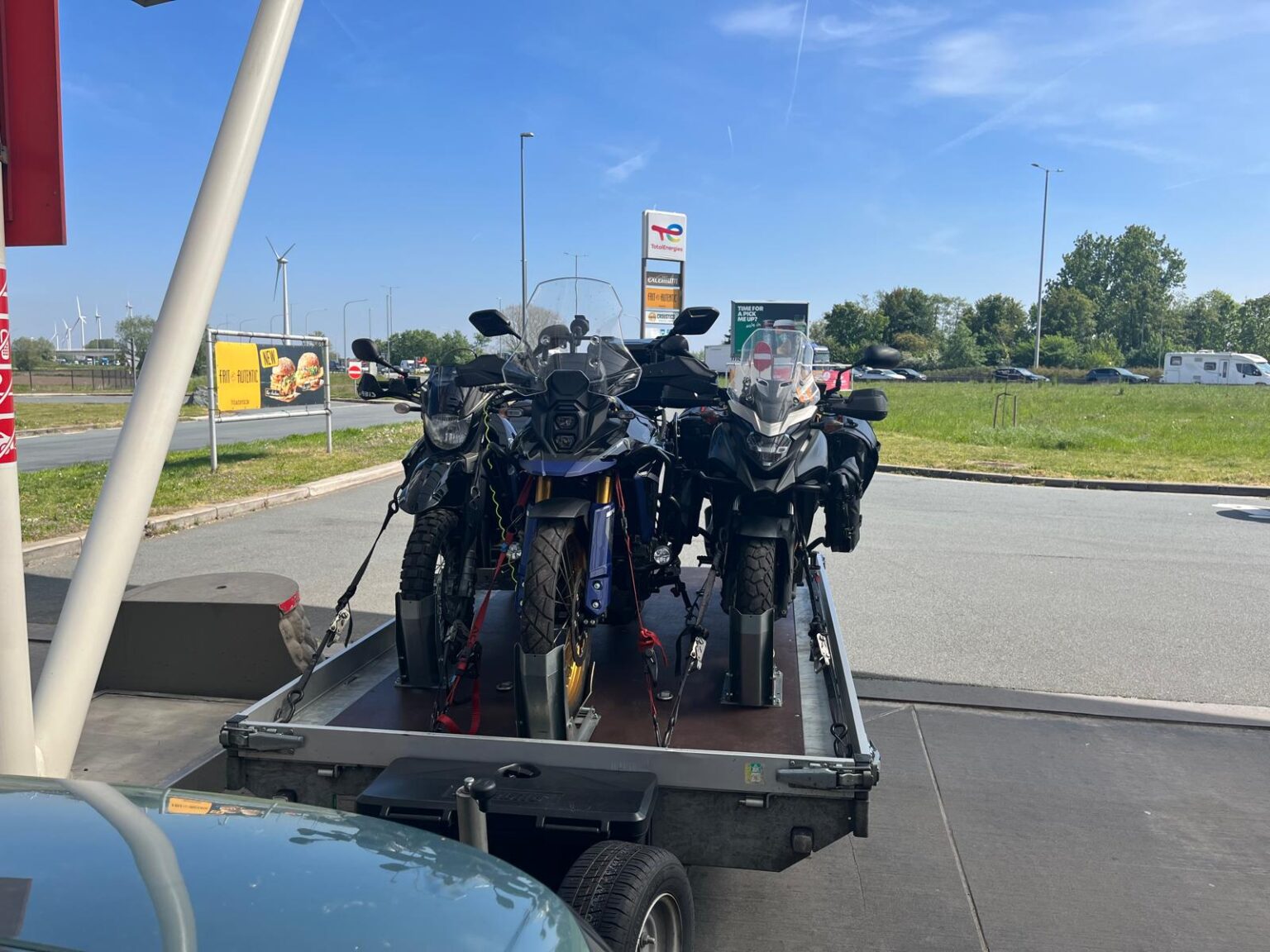
Motorcycle Requirements
A self-guided offroad route requires a reliable, road-legal motorcycle prepared for gravel, mountain terrain and longer riding stages.
What kind of motorcycle do you need?
The PyrAscend route is designed for adventure, dual-sport and offroad-capable touring motorcycles. The motorcycle does not need to be a hard enduro bike, but it must be reliable, road legal and prepared for mixed terrain.
Riders should be able to control their motorcycle on gravel, loose rocks, climbs, descents and slower technical sections. Heavier adventure motorcycles can be used, but they require more control, stronger tires and better preparation.
Example Motorcycles Used for PyrAscend
Honda CB500X, 2018
The Honda CB500X is not a pure offroad motorcycle, but with the right preparation it becomes a capable lightweight adventure bike for mixed terrain. Its manageable size, smooth engine and relatively low weight make it suitable for gravel roads, forest trails and moderate offroad sections.
For PyrAscend, the CB500X was prepared with protective parts and more offroad-capable tires. The bike still has limitations, especially in ground clearance and muddy conditions, but with careful line choice and realistic riding it can handle the type of adventure terrain found on this route.
Setup used
Model: Honda CB500X, 2018
Tires: Continental TKC 70 Rocks, 70/30 adventure tires
Engine protection: SW-Motech skid plate
Hand protection: Barkbusters handguards
Radiator protection: aftermarket radiator guard
Ground clearance: approximately 160 mm
Bike type: small adventure / offroad-capable touring motorcycle
Main limitations: ground clearance on rocks and ruts, and reduced tire performance in mud due to the TKC 70 Rocks tread pattern.
Yamaha XT660X, 2004
The Yamaha XT660X is originally a supermoto, not a dedicated offroad motorcycle. With its 17-inch front wheel and road-oriented setup, it is less stable on rough terrain than a true adventure or enduro bike.
Still, the XT660X has a strong single-cylinder engine, simple mechanics and enough ground clearance to handle gravel roads and moderate offroad trails when properly prepared. For PyrAscend, it was equipped with protection parts and Continental TKC 80 Twinduro tires for better grip on mixed terrain.
Setup used
Model: Yamaha XT660X, 2004
Bike type: supermoto / offroad-capable single-cylinder motorcycle
Tires: Continental TKC 80 Twinduro, 180/55 B17
Front wheel: 17-inch supermoto front wheel
Engine protection: skid plate installed
Hand protection: Barkbusters handguards
Radiator protection: aftermarket radiator guard
Ground clearance: approximately 210 mm original
Ground clearance with skid plate: approximately 190 mm
Key Motorcycle Requirements
Before riding the route, the motorcycle should be prepared for gravel, rocks, mud and uneven mountain terrain. The parts below are the main areas that influence protection, control and reliability during offroad sections.
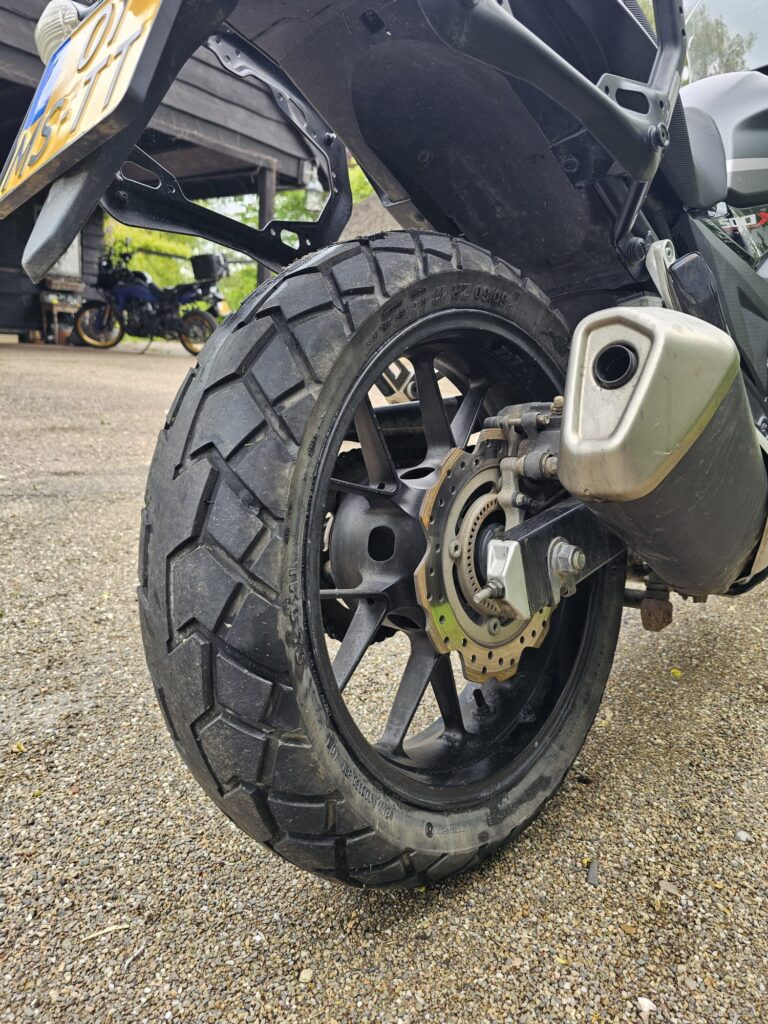
Offroad-Capable Tires
Tires are one of the most important parts of the motorcycle setup. For this route, a 70/30 adventure tire can be sufficient, as shown with the Honda CB500X setup, but pure road tires are not suitable. Gravel, loose stones, mud and mountain tracks require enough profile, side grip and stability to stay in control during mixed terrain sections.
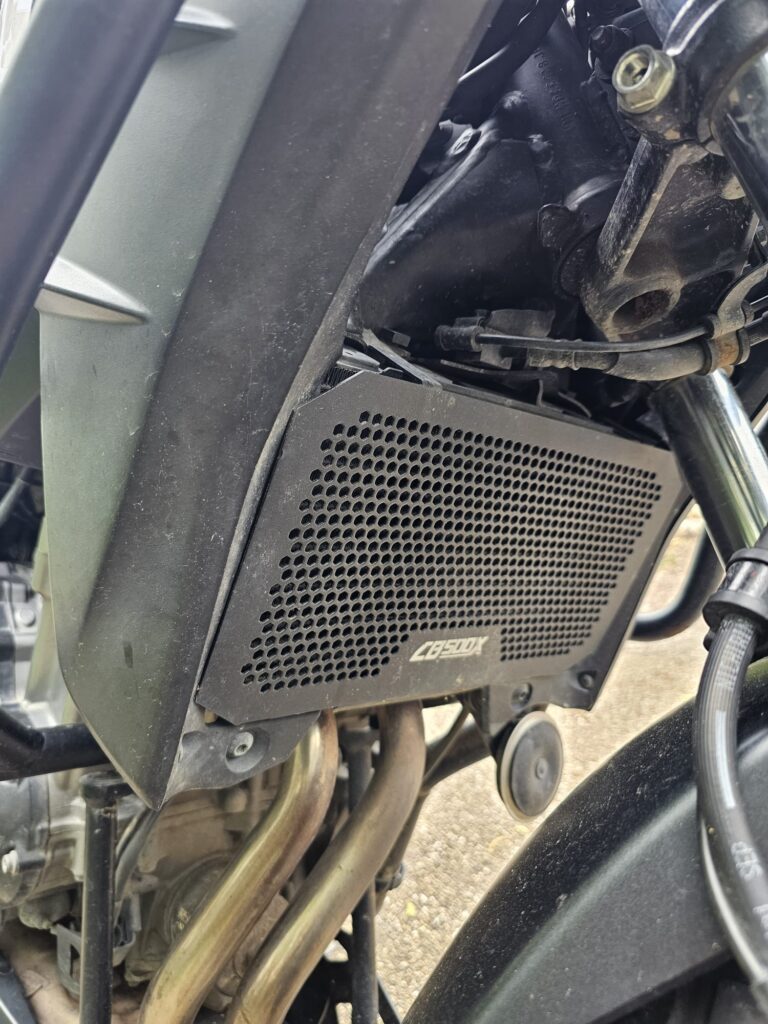
Radiator Protection
A radiator guard is strongly recommended for rocky and technical sections. Loose stones, branches and trail debris can hit the front of the motorcycle, especially when riding behind another bike. Protecting the radiator helps reduce the risk of cooling problems during the route.
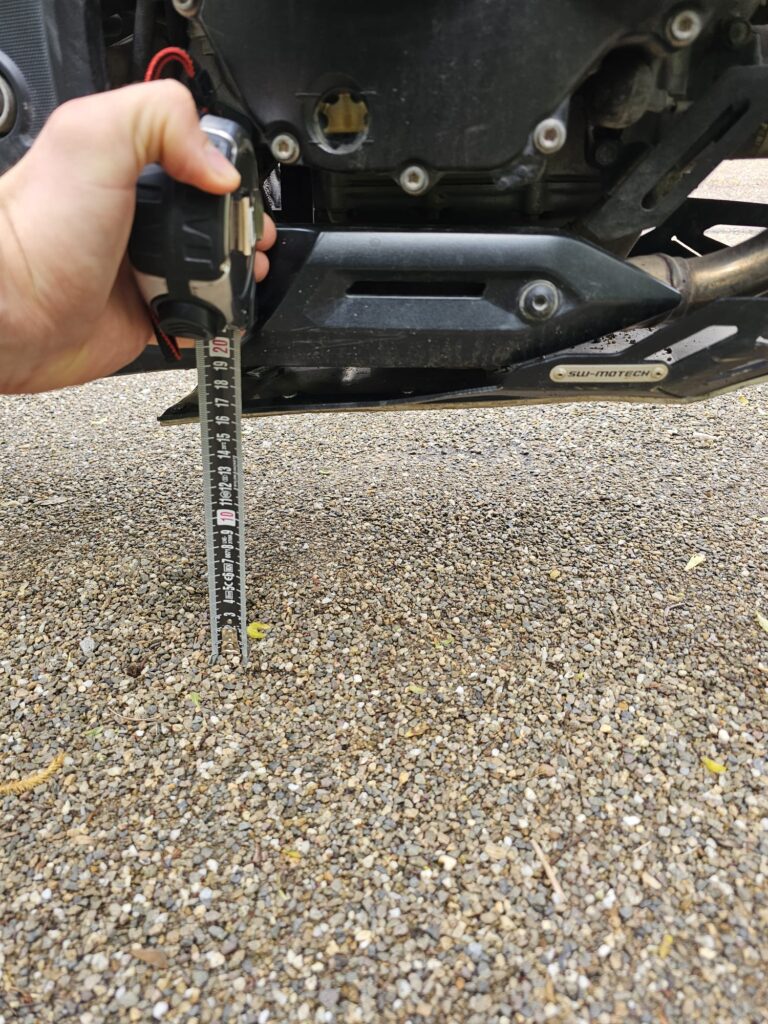
Ground Clearance
Ground clearance matters on rocks, ruts and uneven mountain trails. The Honda CB500X used for PyrAscend has around 160 mm of ground clearance, which is close to the minimum for some parts of the route. Lower motorcycles or exposed parts underneath the bike increase the risk of impacts, so riders need to choose lines carefully on rough sections.
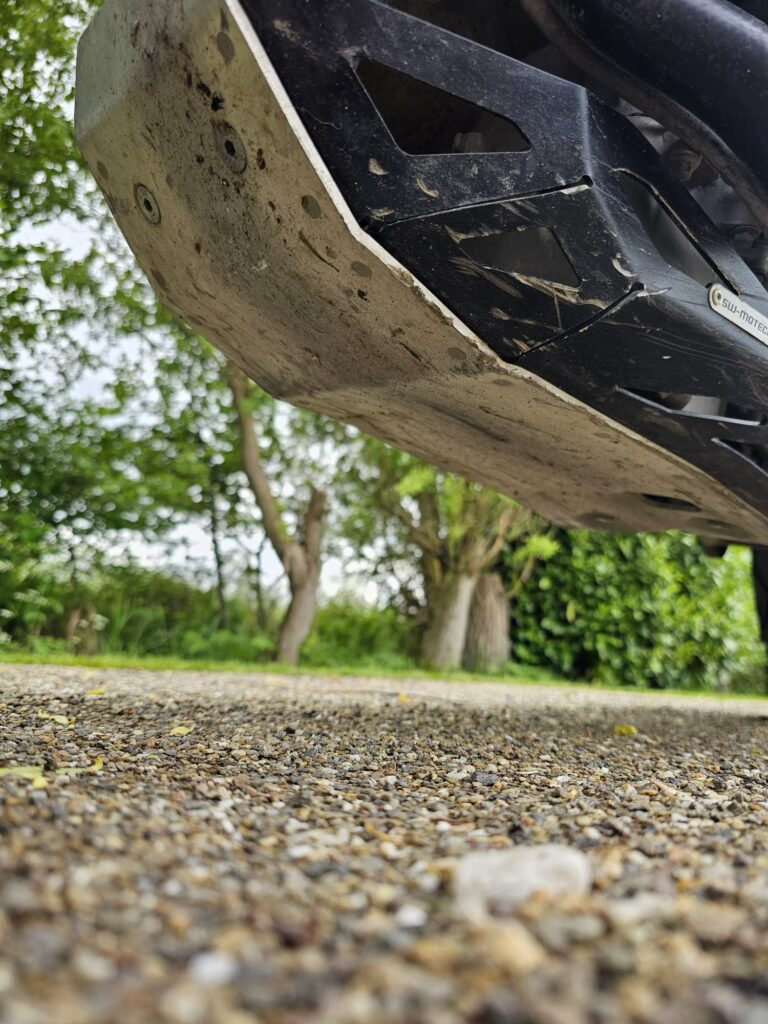
Skid Plate / Engine Protection
A skid plate is a must-have for this route. Loose rocks, ruts and uneven trail surfaces can easily hit the underside of the motorcycle. Without engine protection, the risk of damage to the sump, exhaust headers or lower engine parts is too high during technical offroad sections.
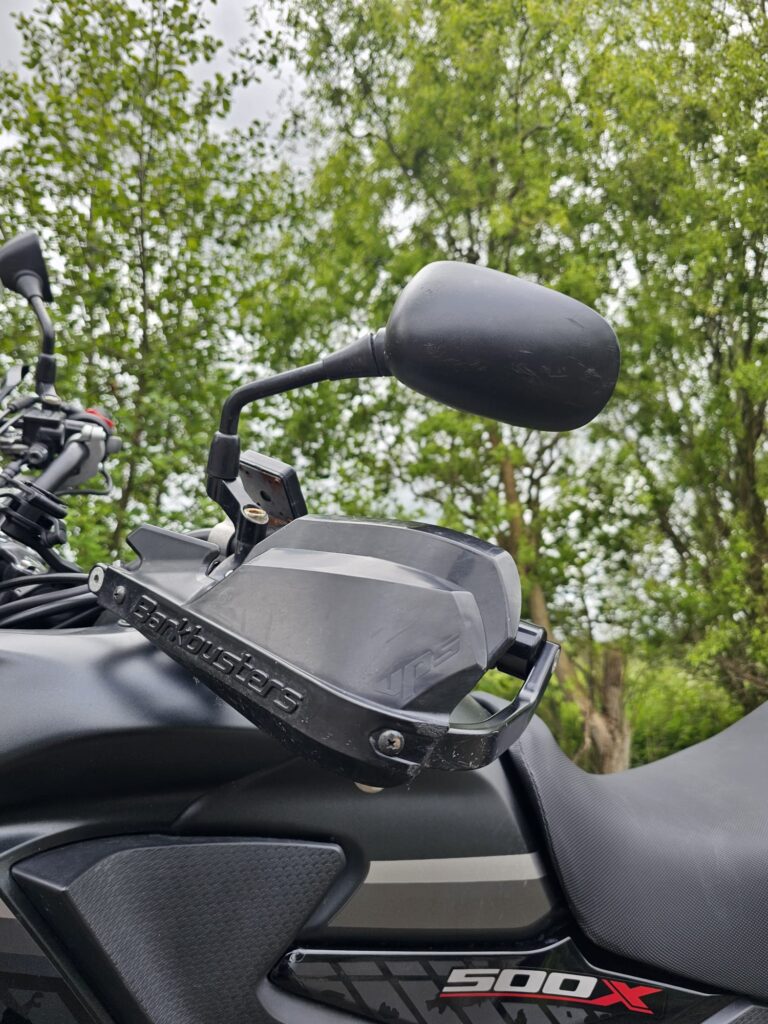
Handguards
Strong handguards are highly recommended. On offroad trails there is a realistic chance of dropping the bike, and this nearly happened multiple times during our own route testing. Proper wrap-around handguards protect both the rider’s hands and the motorcycle’s levers from rocks, branches, falls and slow technical mistakes.
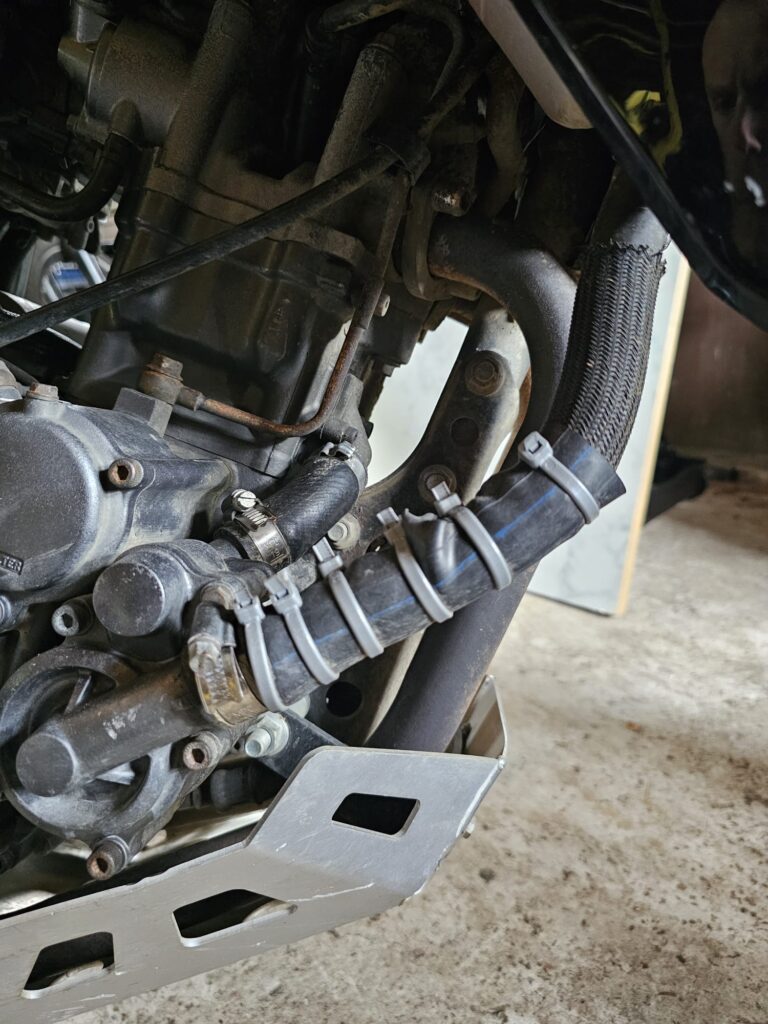
Additional Protection
Extra protection can be useful for vulnerable parts such as coolant hoses, cables and exposed components. During the route, we experienced a leaking coolant hose, which could likely have been prevented with an extra protective sleeve. After the issue, additional hose protection was added to reduce the risk of damage from loose stones or impacts.
Pre-Ride Motorcycle Checklist
Checklist A: Basic Motorcycle Check
- Offroad-capable tires fitted
- Tire pressure checked
- Brakes checked
- Chain and sprockets checked
- Oil level checked
- Coolant level checked
- Radiator and hoses inspected
- Lights and indicators working
- Battery condition checked
- No known leaks or mechanical issues
Checklist B: Protection Installed
- Skid plate / engine protection installed
- Radiator guard installed
- Handguards installed and secure
- Vulnerable hoses protected
- Luggage mounting points inspected
- Ground clearance checked for rough terrain
- Exposed parts checked
- Bolts and mounting points tightened
Set Up Your Navigation Next
After checking your motorcycle, prepare your GPX device, offline maps, charging setup and backup navigation before riding the route.